
Santa Clarita Sewer Repair: Project example: a sewer scope during a Stevenson Ranch home sale finds an offset joint, and a 50-foot cured-in-place liner fixes it — what it involves and what it costs
Santa Clarita Sewer Repair follows a typical home-sale timeline in Stevenson Ranch: a sewer scope ordered during the inspection period turns up one offset joint on a two-story home, the report and video are reviewed and priced while the clock runs, the parties settle on a repair before closing, and the lateral is lined and documented for the escrow file.
Bookings aren't open yet. Leave your name and number; your message is recorded, and you'll get one message when a local installer is available.
Worked example. The pictures are AI concept illustrations, not photographs; no installation was performed or arranged through this site; prices are typical Santa Clarita Valley market ranges, not quotes.
 Illustration
Starting pointFinished layout (concept)
Illustration
Starting pointFinished layout (concept)
Project Examples & Typical Prices
The scenario
The setting is a two-story Stevenson Ranch home in escrow, in one of the tracts built in the late 1980s and early 1990s. The purchase contract gives the buyer's side a fixed inspection period to investigate the property and raise requests, and the general home inspection has already noted that it does not cover the underground sewer line. A sewer scope is added as a separate inspection, a common step in Santa Clarita Valley sales because the owner is typically responsible for the lateral and repairs to it are not small.
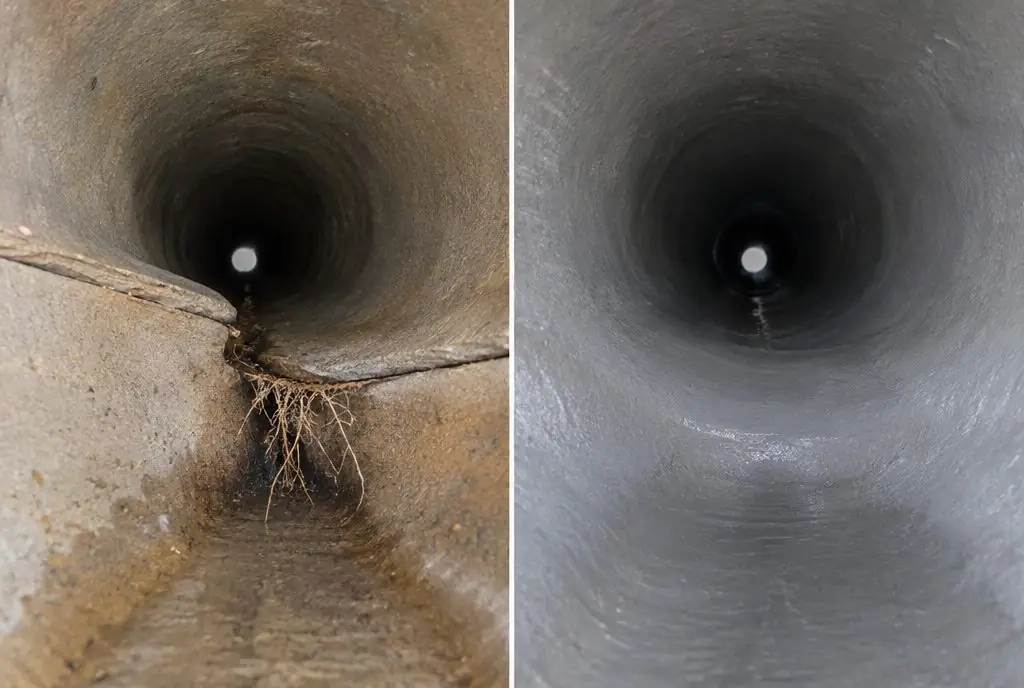
The scope runs from an outside cleanout near the garage toward the street, about 50 feet of ABS pipe under the front lawn and a planting bed. The report that comes back has three parts: the full video file, a short written description of what the camera saw and where, and a sketch of the line's path and depth traced from the surface. It records one finding of note: a joint roughly two-thirds of the way out where one section has dropped slightly below the next, with a thin fringe of roots at the gap. Everything else is described as round, on grade and free of standing water.
What the written report lists:
- Pipe material and diameter, and the cleanout used for access
- Distance from the cleanout to each observation, with the depth from the surface trace
- The offset joint, its approximate size and the roots at it
- A note that the camera passed the offset without difficulty
- A note that the line appeared sound elsewhere on the day of the inspection
What the job involves
- The scope report and video reach both agents within the inspection period, and the distance markers in the video are matched to the surface sketch so everyone is looking at the same spot on the lawn.
- A second plumber reviews the same video file, not just screenshots, and prices the finding; both reviews agree that the offset is small enough to bridge from inside and that the rest of the line suits lining.
- With the repair options and their typical ranges on paper, the buyer's side and the seller's side settle the request inside the inspection period: here, a repair completed and documented before closing, rather than a credit or a price change.
- The work is scheduled into the remaining escrow days, and the line is cleaned with a jetter and root-cutting nozzle, then filmed again to confirm the offset and the walls are clear before anything is installed.
- The lateral is lined from the garage-side cleanout in a single run toward the street; once the resin has hardened, the ends are finished and the transition at each end is inspected on camera.
- A closing package goes to escrow: the original scope video, the post-cleaning video, the post-lining video at the same distance markers, the plumbing permit sign-off where the city or county required one, and a one-page summary of the work.
Hardware and materials
- The original scope video file, a written description with distances and depths, and a surface sketch of the line
- A second review of the same video by another plumber, with a written price for the finding
- Hydro jetter with a root-cutting nozzle for cleaning before lining
- Cured-in-place liner and resin for a 50-foot residential run, with the installer's curing equipment
- Camera with distance counter for the post-cleaning and post-lining videos
- A one-page work summary and permit sign-off for the escrow file
What it typically costs in the Santa Clarita Valley
| Trenchless lining (cured-in-place pipe), 50 feet of sewer lateral installed ($80–$180 per foot) | $4,000–$9,000 |
| Camera inspection with video | +$150–$400 |
| Hydro jetting and root cutting | +$400–$800 |
| Typical total | $4,550–$10,200 (market range, not a quote) |
These are typical local ranges, not a quote or an offer; an installer prices the actual job after seeing the wall.
Add-ons often paired with this job
- New two-way cleanout — +$800–$2,000. Where the only access is a roof vent or a pulled toilet, adding a two-way cleanout before lining gives a proper launch point and simplifies every later inspection.
- Spot repair of one section — +$1,500–$4,000. If the second review had found the offset too large to bridge, digging out that one joint before lining would have been the request instead.
- Section under the street (public right of way) — +$3,000–$9,000. A defect beyond the property line would bring a separate permit and timeline, which can matter more than cost when closing dates are fixed.
Why it is done this way
In a sale, the timeline shapes the repair as much as the pipe does. The inspection period is short, so the findings have to be clear, comparable and priced quickly; a full video file with distance markers lets a second plumber price the same thing without repeating the scope. The written description and the surface sketch turn a video into something the parties can negotiate over.
Lining suits this finding because the defect is one small offset in pipe that is otherwise round and on grade, and because it fits into the remaining escrow days without opening the front lawn and planting bed. The cleaning and the second camera pass are not extras: a liner set against roots or debris would bond poorly, and the post-cleaning video shows the line was ready.
The closing package is what makes the repair useful to the next owner. Videos filmed at the same distance markers on each visit show exactly what the work changed, and they stay with the house records.
How the three common outcomes of a scope finding compare during escrow:
- Repair before closing: the work is done and documented on the seller's side; it needs time in the escrow schedule.
- Credit or price change: no work before closing; the new owner arranges the repair afterward.
- No request: the finding is accepted as is, with the video kept for later reference.
What would change the price
- The second review finds the offset larger than the first report suggests — a dig at that joint is added before lining, which also needs more escrow days.
- There is no outside cleanout — access through a roof vent or a toilet slows both the scope and the lining, or a cleanout is added first.
- The inspection period is nearly over when the report arrives — scheduling the work quickly can narrow the choice of method and installer.
- The scope continues past the property line and finds a problem there — the street section is a separate permit, price range and timeline.
- The city or county requires a permit for the lining — permit fees, where they apply, are outside the estimator's ranges.
Where this leads
- Service page: Pre-Purchase Sewer Inspection — A recorded camera scope of the lateral during escrow, so the buyer knows the pipe before the house is theirs.
- Local page: Sewer line repair in Stevenson Ranch
- All services and typical prices: sewer line repair in Santa Clarita
- More worked examples: Project Examples & Typical Prices
Check availability and the price range for this setup
Bookings aren't open yet — describe the sewer line and you get a Santa Clarita price range right here. Typical Santa Clarita Valley installed prices for residential sewer lateral work, labor and materials. This is a market estimate, not a quote. Permit fees, inspection fees and street restoration charges, where they apply, are not included.